
If you are planning your first Himalayan trek, let me tell you something honestly — the mountains do not test your enthusiasm. They test your preparation.
The Himalayas are beautiful, spiritual, life-changing… but they are also physically demanding. Steep ascents, thin air, long walking hours, cold temperatures, and unpredictable weather can break unprepared trekkers.
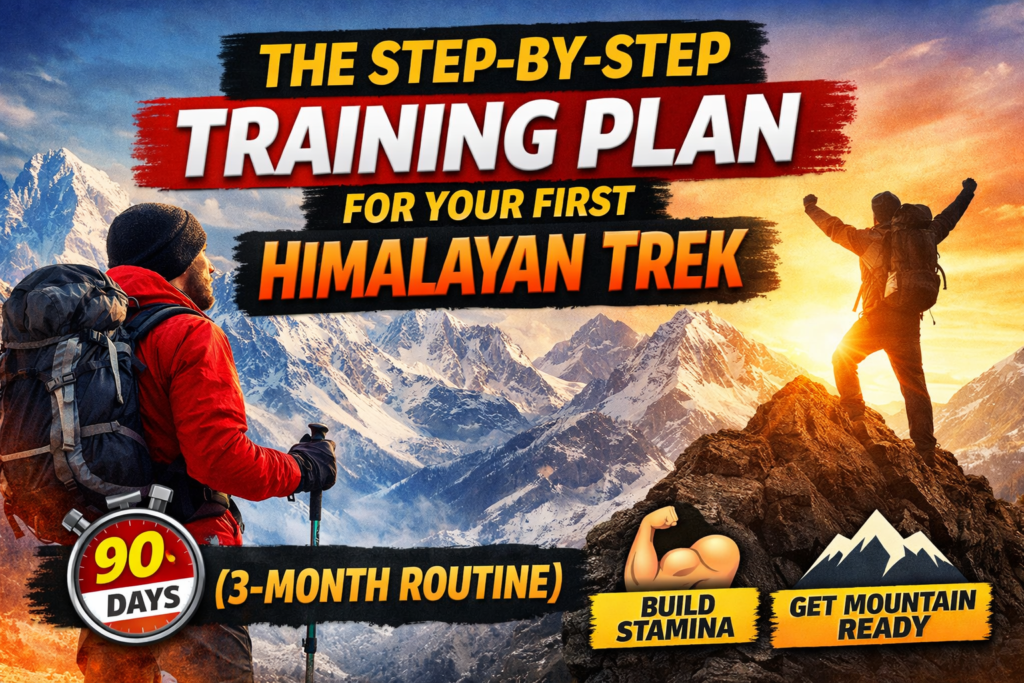
That’s exactly why you need The Step-by-Step Training Plan for Your First Himalayan Trek (3-Month Routine).
This is not a generic fitness article. This is a complete 90-day transformation blueprint designed specifically for beginners preparing for Himalayan treks like:
- Kedarnath Temple
- Tungnath Temple
- Valley of Flowers National Park
- Triund Trek
- Hampta Pass
Whether you are 18 or 45, overweight or average fitness — if you follow this 3-month routine properly, you will be mountain-ready.
Let’s begin.
Why You Need a 3-Month Training Plan for Your First Himalayan Trek
The Himalayas are different from city gyms.
At altitude:
- Oxygen reduces
- Heart rate increases
- Fatigue hits faster
- Recovery takes longer
Even a “moderate” Himalayan trek can involve:
- 5–8 hours walking daily
- 8–12 km distance per day
- 1,000–1,500 feet elevation gain
- Carrying a 5–8 kg backpack
Without preparation, your first trek can turn from dream to disaster.
That’s why this Step-by-Step Training Plan for Your First Himalayan Trek (3-Month Routine) focuses on:
✔️ Stamina
✔️ Leg strength
✔️ Lung capacity
✔️ Core stability
✔️ Mental endurance
Understanding Himalayan Trek Demands
Before training, understand what your body will face:
1. Long Ascents
Mountain trails rarely stay flat. You will climb continuously.
2. Descents (More Dangerous!)
Downhill walking can destroy knees if not trained properly.
3. Backpack Load
Even light trekking bags strain the shoulders and lower back.
4. Altitude Effects
Above 8,000 feet:
- Breathlessness increases
- Headache risk rises
- Energy drains faster
That’s why random jogging is NOT enough. You need structured training.
Overview of the 3-Month Transformation Plan
| Month | Focus | Goal |
|---|---|---|
| Month 1 | Foundation | Build stamina base |
| Month 2 | Strength & Endurance | Leg power + lung capacity |
| Month 3 | Trek Simulation | Mountain-specific conditioning |
Now we go deep.
MONTH 1: Build the Foundation (Weeks 1–4)
Goal: Improve basic stamina & mobility
If you are starting from zero, this phase is crucial.
Weekly Structure
- 4 cardio days
- 2 strength days
- 1 rest day
Cardio Routine (Month 1)
Week 1
- 20-minute brisk walk (5 days)
- Slow pace
- Focus on breathing rhythm
Week 2
- 30-minute brisk walk
- Add 5 minutes incline (if treadmill available)
Week 3
- 35–40 minutes walk/jog mix
Week 4
- 45 minutes of continuous brisk walking
Target: Walk 4–5 km comfortably without stopping.
Strength Training (Month 1)
Twice per week:
- 3 sets × 15 squats
- 3 sets × 12 lunges each leg
- 3 sets × 20 calf raises
- 30-second plank × 3
This builds leg endurance for Himalayan trails.
Breathing Training
Daily:
- 5 minutes deep belly breathing
- Inhale 4 sec – Hold 2 sec – Exhale 6 sec
This improves lung efficiency for altitude.
MONTH 2: Strength + Endurance Upgrade (Weeks 5–8)
Now we level up.
This is where your body begins transforming into a trekker.

Cardio Upgrade
4–5 days per week
- 45–60 min brisk walking
OR - 30 min jogging
Add:
- Stair climbing (15–20 minutes)
- If possible, climb 10–15 floors daily
Stairs simulate mountain ascent.
Strength Upgrade
3 days per week:
- Squats (with backpack weight)
- Step-ups on bench (20 reps each leg)
- Walking lunges (20 steps)
- Wall sit (1 min × 3)
- Plank (45 sec × 3)
Now your legs start becoming mountain-strong.
Weekend Mini Hike
Every Sunday:
- 5–8 km outdoor walk
- Carry a 3–4 kg backpack
Simulate trekking conditions.
MONTH 3: Himalayan Simulation Phase (Weeks 9–12)
This is the most important phase of the Step-by-Step Training Plan for Your First Himalayan Trek (3-Month Routine).
Now we train like trekkers.
Weekly Structure
- 5 workout days
- 1 long hike day
- 1 full rest day
Advanced Cardio
- 60-minute brisk walk with a backpack
- Stair climbing (20–25 minutes)
- Incline treadmill (10–12%)
Strength + Stability
3 rounds circuit:
- 20 weighted squats
- 20 step-ups
- 15 pushups
- 1-minute plank
- 15 burpees
Rest 1 min. Repeat 3 times.
Long Simulation Hike
Once weekly:
- 8–12 km
- Carry a 5–6 kg bag
- Walk continuously for 3–4 hours
This prepares your mind for long trek days.
Flexibility & Recovery (Often Ignored)
After every workout:
- Hamstring stretch
- Quad stretch
- Calf stretch
- Hip flexor stretch
Recovery prevents injury.
Sleep a minimum of 7 hours daily.
Nutrition Plan for First Himalayan Trek Preparation
Training without a proper diet = wasted effort.
Daily Protein Target
1.2–1.5g per kg body weight
Sources:
- Eggs
- Paneer
- Dal
- Chicken
- Sprouts
Hydration
3–4 liters daily.
Reduce:
- Fried food
- Sugar
- Alcohol
Mental Preparation for Himalayan Trek
Mountains test mindset more than muscles.
Practice:
- Long walks without a phone
- Early morning wake-up
- Cold showers (optional)
Mental resilience = successful summit.
Common Mistakes Beginners Make
❌ Only doing gym upper-body workouts
❌ Ignoring stair climbing
❌ Not training with a backpack
❌ No rest days
❌ Crash dieting
Avoid these.
Signs You Are Trek-Ready
You are ready when:
✔️ You can walk 10 km without exhaustion
✔️ Climb 15 floors without heavy breath
✔️ Carry a 6 kg bag comfortably
✔️ Recover in 24 hours
Bonus: 4-Week Countdown Plan Before Trek
Final month adjustments:
- Increase carb intake slightly
- Practice walking on uneven terrain
- Break in trekking shoes in advance
- Pack and test backpack
Trek-Specific Preparation Examples
If you’re preparing for:
Kedarnath Temple
Focus more on altitude breathing.
Tungnath Temple
Prepare for a steep ascent.
Hampta Pass
Train for multi-day endurance.
FAQ
1. How do I start preparing for my first Himalayan trek?
To prepare for your first Himalayan trek, start at least 3 months in advance. Focus on building stamina through walking or jogging, strengthen your legs with squats and lunges, practice stair climbing, and improve breathing capacity. Following a structured 3-month training plan is the safest and most effective approach.
2. Is 3 months enough to train for a Himalayan trek?
Yes, 3 months is sufficient for beginners if you follow a consistent and progressive routine. A 90-day training plan helps build endurance, leg strength, lung capacity, and mental stamina needed for high-altitude trekking.
3. How fit do I need to be for my first Himalayan trek?
You should be able to:
- Walk 8–10 km comfortably
- Climb 10–15 floors without extreme breathlessness
- Carry a 5–6 kg backpack
- Recover within 24 hours after long walking
Basic fitness is enough for beginner-level Himalayan treks.
4. Can beginners do a Himalayan trek without gym training?
Yes. Gym is optional. You can train at home using bodyweight exercises like squats, lunges, planks, stair climbing, and long outdoor walks. Consistency matters more than gym equipment.
5. What exercises are best for Himalayan trek preparation?
The best exercises include:
- Squats
- Lunges
- Step-ups
- Stair climbing
- Planks
- Brisk walking
- Incline walking
These movements simulate mountain climbing conditions.
6. How many kilometers should I be able to walk before my trek?
Before your trek, you should comfortably walk 10–12 km with a light backpack. This indicates good endurance for multi-day Himalayan trekking.
7. How important is stair climbing for Himalayan trek training?
Stair climbing is extremely important. It closely simulates uphill mountain trekking and builds leg endurance, heart strength, and lung capacity. Aim for 15–20 minutes daily in the final month.
8. Do I need to train with a backpack before my trek?
Yes. Training with a backpack helps your shoulders, back, and core adjust to weight. Start with 3 kg and gradually increase to 5–6 kg during your long practice walks.
9. How can I improve breathing for high-altitude trekking?
Practice deep breathing exercises daily:
- Inhale for 4 seconds
- Hold for 2 seconds
- Exhale for 6 seconds
Cardio workouts like brisk walking and jogging also improve lung efficiency for altitude.
10. What should I eat during the 3-month trek training plan?
Focus on:
- High protein intake (1.2–1.5g per kg body weight)
- Complex carbohydrates (rice, oats, roti)
- Fresh vegetables
- Adequate hydration (3–4 liters daily)
Avoid junk food and excessive sugar.
11. Can overweight people prepare for a Himalayan trek?
Yes, absolutely. With a proper 3-month routine focusing on gradual cardio and strength training, overweight beginners can safely prepare for moderate Himalayan treks.
12. How many days per week should I train for my first Himalayan trek?
Train 5–6 days per week:
- 3–4 cardio sessions
- 2–3 strength sessions
- 1 long practice hike
- 1 full rest day
Consistency is key.
13. Is running necessary for Himalayan trek preparation?
Running is helpful but not mandatory. Brisk walking, incline walking, and stair climbing are equally effective and safer for beginners.
14. How do I know if I am ready for my Himalayan trek?
You are ready if:
- You can walk 10 km without exhaustion
- You can climb 15 floors comfortably
- You can carry a 6 kg weight for 3–4 hours
- Your body recovers quickly after workouts
15. What are the common mistakes during Himalayan trek training?
Common mistakes include:
- Skipping leg training
- Ignoring stair workouts
- Not training with a backpack
- Overtraining without rest
- Poor diet and hydration
Avoiding these increases your success rate.
16. Should I practice hiking on uneven terrain?
Yes. Practicing on uneven trails improves ankle stability, balance, and confidence. Try local hills, parks, or rocky paths during your final training month.
17. How important is mental preparation for Himalayan trekking?
Mental strength is as important as physical fitness. Long walking hours, weather changes, and fatigue require patience and resilience. Practice long phone-free walks and early wake-up routines.
18. Can I prepare for a Himalayan trek at home?
Yes. Home-based training using bodyweight exercises, stairs, and outdoor walking is fully sufficient for beginner Himalayan treks if done consistently for 3 months.
19. Should I train differently for high-altitude treks above 12,000 feet?
Yes. For higher altitude treks, focus more on cardio endurance, breathing exercises, and longer practice hikes. Gradual pace training is essential for altitude adaptation.
20. What is the biggest factor for a successful first Himalayan trek?
Consistency in training is the biggest factor. A structured Step-by-Step Training Plan for Your First Himalayan Trek (3-Month Routine) followed regularly will prepare your body, lungs, and mindset for mountain challenges.

Final Words
Your first Himalayan trek will change you.
But preparation determines whether it becomes:
- A painful struggle
OR - A powerful life memory
Follow this Step-by-Step Training Plan for Your First Himalayan Trek (3-Month Routine) seriously.
Consistency beats intensity.
Mountains reward discipline.
And when you finally stand at 12,000 feet, breathing the cold Himalayan air, you will thank yourself for every single workout you did.

