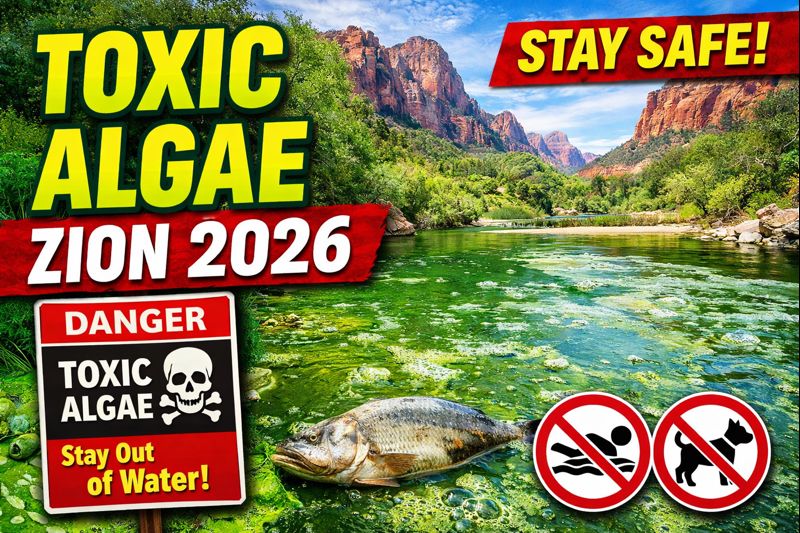

Toxic Algae Zion 2026 has emerged as a significant ecological and health concern for visitors, wildlife, and conservationists. Zion National Park, known for its breathtaking sandstone cliffs, the Virgin River, and serene canyons, faces recurring outbreaks of harmful algal blooms (HABs). These blooms not only affect water quality but also pose serious risks to human health, wildlife, and the park’s ecosystem balance.
Understanding Toxic Algae Zion 2026 is critical for visitors planning trips, local authorities managing safety, and scientists studying climate and environmental impacts. This guide provides a comprehensive overview, including scientific explanations, seasonal patterns, historical data, ecological effects, visitor safety measures, and mitigation strategies.
What Is Toxic Algae and Why Is It Relevant to Zion National Park
Toxic algae, often called Harmful Algal Blooms (HABs), are colonies of microscopic organisms that can produce dangerous toxins. In Zion, HABs primarily affect:
- Shallow pools and river backwaters
- Slow-moving sections of the Virgin River
- Artificial ponds or water-retaining areas near trails
These blooms can cause:
- Skin rashes, eye irritation, or allergic reactions in humans
- Gastrointestinal illness if water is ingested
- Respiratory irritation from airborne algae particles near waterfalls
- Death of fish, amphibians, and small mammals
Toxic Algae Zion 2026 is influenced by a combination of natural factors and human-induced environmental pressures, making it an increasingly important issue for park management.
Causes of Toxic Algae in Zion – Why 2026 Is a High-Risk Year
Several interrelated factors contribute to Toxic Algae Zion 2026 outbreaks:
1. Warm Water Temperatures
Algal growth is accelerated in water temperatures above 70°F (21°C). The increasing number of heatwaves in 2026 has created favorable conditions for algae proliferation.
2. Nutrient Pollution
Runoff from surrounding agricultural areas, fertilizers, and human activity introduces nitrogen and phosphorus into water bodies. These nutrients act as food for algae, leading to bloom formation.
3. Stagnant or Slow-Moving Water
Algae thrive in calm, stagnant sections of rivers and pools. Areas like the Virgin River’s shallow zones or offshoots from main streams are particularly susceptible.
4. Climate Change
Changing precipitation patterns, longer dry periods, and higher temperatures are creating new and unpredictable conditions for algal blooms in Zion National Park.
5. Human Influence
Increased tourism, unregulated camping, and littering contribute indirectly to nutrient enrichment in water bodies.
Scientific Explanation of Toxic Algae
The main genera responsible for toxic algae in Zion are:
- Microcystis – Produces microcystins, liver toxins
- Anabaena – Produces neurotoxins
- Oscillatoria – Can cause digestive and skin irritation
Algal toxins are highly stable and can persist for days, even after visible blooms disappear. Studies suggest that nutrient-rich runoff and prolonged sunlight create an ideal environment for these algae to multiply.
Historical Trends and 2026 Predictions
Historically, Zion National Park has experienced sporadic outbreaks:
- 2010–2015: Minor blooms reported in pools near Riverside Walk
- 2016–2019: Moderate blooms observed in low-flow areas
- 2020–2025: Increased frequency attributed to climate change
Toxic Algae Zion 2026 is expected to be more severe due to:
- Warmer-than-average spring temperatures
- Reduced water flow from earlier snowmelt
- Higher visitor numbers are increasing human activity near water
Monitoring programs suggest early detection is possible, but preventive management remains challenging.
Health Risks of Toxic Algae Zion 2026
Visitors and wildlife face multiple health risks:
Humans
- Skin contact: Rashes, itching, and irritation
- Ingestion: Nausea, vomiting, diarrhea
- Inhalation: Respiratory irritation from splashes or wind-blown particles
Pets
- Dogs are highly sensitive; even small amounts of toxic algae can be fatal if ingested.
Wildlife
- Fish, amphibians, and small mammals are affected
- Toxic algae disrupts food chains and reduces biodiversity
Seasonal Patterns of Toxic Algae Zion 2026
Spring (March–May)
- Early blooms emerge as water warms
- Stagnant pools near trails are first affected
- Park visitors may experience early caution notices
Summer (June–August)
- Peak algal growth due to the highest temperatures
- Tourist season increases the risk of human exposure
- Most reported cases of Toxic Algae Zion 2026 occur in summer
Fall (September–October)
- Bloom declines as water temperatures drop
- Sporadic blooms can still occur in slow-moving sections
Winter (November–February)
- Minimal risk due to low water temperatures
- Most algae remain dormant
Areas in Zion National Park Most Affected
Certain zones are more prone to Toxic Algae Zion 2026:
- Virgin River Pools – Especially shallow and slow-flowing areas
- Kolob Canyons Streams – Small tributaries with nutrient accumulation
- Riverside Walk Pools – Human activity contributes nutrients
- Shallow Water Offshoots – Temporary pools formed by seasonal flow changes
Visitors should check park advisories for updated maps and warning signs.
Impact on Wildlife and Ecosystems
Toxic Algae Zion 2026 affects multiple aspects of the ecosystem:
- Fish kills – Toxins reduce the survival of juvenile and adult fish
- Amphibian decline – Tadpoles and frogs are highly vulnerable
- Disruption of food chains – Reduced insect populations affect birds and mammals
- Habitat degradation – Algae mats cover surfaces and reduce oxygen levels
The long-term ecological balance of Zion National Park depends on careful management of algal outbreaks.
Visitor Precautions During Toxic Algae Outbreaks
Do’s
- Avoid swimming or wading in water
- Keep pets away from streams and pools
- Wash your hands thoroughly if contact occurs
- Follow park signs and official updates
Don’ts
- Do not drink untreated river water
- Do not touch or disturb algae mats
- Avoid feeding wildlife or leaving food near water
Compliance reduces both human and wildlife risk during Toxic Algae Zion 2026.
Park Regulations and Safety Measures
Zion National Park authorities implement strict measures:
- Warning signs and advisories at high-risk areas
- Temporary closure of affected river sections
- Frequent water testing for toxins
- Visitor education through websites and ranger briefings
Adhering to these regulations is essential to staying safe during Toxic Algae Zion 2026.
Environmental Management and Mitigation Efforts
Efforts to reduce the impact of Toxic Algae Zion 2026 include:
- Monitoring nutrient levels and early detection systems
- Preventing runoff from nearby urban and agricultural areas
- Educating visitors about human impact
- Researching long-term ecological solutions
Successful mitigation requires collaboration between park authorities, scientists, and visitors.
Long-Term Consequences of Repeated Algae Blooms
If Toxic Algae Zion 2026 becomes frequent:
- Fish and amphibian populations may permanently decline
- Water quality will deteriorate for recreational use
- Tourism could be affected by safety concerns
- Ecosystem diversity and stability may suffer
Ongoing research and climate adaptation strategies are critical.
The Role of Climate Change in 2026 Toxic Algae Events
Climate change significantly influences Toxic Algae Zion 2026:
- Higher temperatures accelerate algae growth
- Drought reduces water flow, creating stagnant pools
- Altered precipitation patterns increase nutrient concentration
Understanding climate links helps predict and manage outbreaks.
Scientific Studies and Research on Toxic Algae in Zion
Research in recent years shows:
- Microcystins (toxic compounds) were detected in multiple pools
- Toxic algae persist longer in shallow, nutrient-rich areas
- Wildlife monitoring shows increased mortality in affected zones
These findings inform safety policies and park management strategies for Toxic Algae Zion 2026.
Tourism Implications of Toxic Algae Zion 2026
Positive Impacts
- Awareness leads to better visitor behavior
- Funding for ecological research increases
- Visitors learn about the importance of ecosystem health
Negative Impacts
- Restricted swimming and wading areas
- Increased visitor anxiety
- Potential loss of tourist revenue if outbreaks are severe
Responsible tourism is key to managing Toxic Algae Zion 2026.
How Visitors Can Safely Experience Zion During Algae Outbreaks
- Stick to hiking trails and avoid water contact
- Attend ranger-led tours for safe viewing of rivers and canyons
- Keep pets leashed and away from water
- Use hand sanitizer and wash gear after outdoor activities
Being informed reduces the risk of illness or injury during Toxic Algae Zion 2026.

FAQs
- What causes harmful algae blooms in rivers and streams?
Harmful algae blooms occur due to warm water temperatures, nutrient-rich runoff from fertilizers, and stagnant water that allows algae to multiply rapidly. - How can algae affect human health?
Exposure can cause skin irritation, rashes, eye irritation, gastrointestinal problems, and respiratory discomfort if algae toxins are inhaled. - Are pets at risk when playing in river water?
Yes, dogs and other pets can be severely affected or even die if they ingest water contaminated with toxic algae. - Which months are most likely to see algae growth?
Algae growth peaks during late spring and summer when water temperatures rise and nutrient levels are high, and declines in fall and winter. - Can swimming in affected water make someone sick?
Yes, swimming or wading in contaminated water can lead to skin irritation, nausea, vomiting, and other mild to severe health issues. - How does climate change influence algae outbreaks?
Rising temperatures, prolonged droughts, and altered rainfall patterns create ideal conditions for algae to grow faster and more frequently. - Are all algae toxic or just specific types?
Only specific types, like Microcystis, Anabaena, and Oscillatoria, produce harmful toxins; most algae are harmless and part of the ecosystem. - What are the signs of water contamination by algae?
Signs include green, blue, or brown mats on the water surface, foul odors, and dead fish or other wildlife near the affected area. - How do park authorities monitor water safety?
Authorities conduct regular water testing for toxins, post warning signs, temporarily close contaminated sections, and educate visitors on safe practices. - Can fish or wildlife survive in algae-affected areas?
Many aquatic organisms struggle or die due to oxygen depletion and toxins, which disrupt the natural food chain and local ecosystem. - What precautions should hikers take near rivers and pools?
Avoid direct contact with water, keep pets away, wash hands thoroughly, and follow posted warnings or ranger guidance. - Is there a way to safely remove algae from water bodies?
In natural settings, algae cannot be fully removed; management focuses on preventing nutrient runoff and minimizing human interference. - How long do algal blooms usually last in rivers?
Bloom duration depends on temperature, sunlight, and nutrient availability, typically lasting from several days to a few weeks. - Can algae blooms occur in cold water conditions?
Algal growth is minimal in cold water; most harmful blooms develop in warm, nutrient-rich environments. - What steps can visitors take to reduce environmental impact?
Visitors can avoid leaving food waste, keep chemicals and detergents away from water, follow park rules, and stay on designated trails.
Conclusion: Understanding and Respecting Toxic Algae in Zion National Park
Toxic Algae Zion 2026 is a natural but increasingly significant phenomenon. It reflects the delicate balance between environmental health, human activity, and the survival of wildlife. While it poses risks, proper awareness, adherence to park guidelines, and ecological stewardship allow visitors to safely enjoy Zion National Park.
Monitoring, conservation, and responsible tourism are critical for protecting the park’s ecosystems while minimizing health hazards. By understanding Toxic Algae Zion 2026, visitors, scientists, and authorities can work together to preserve one of America’s most treasured natural landscapes.


