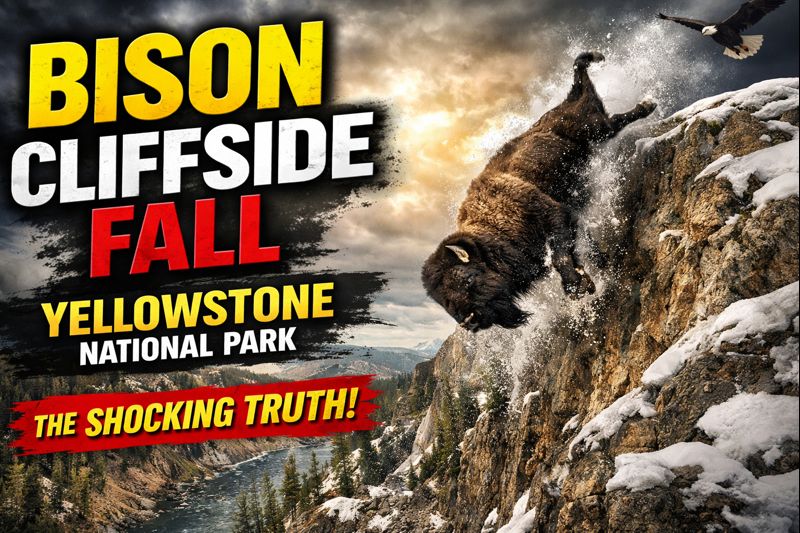

The sight of a bison cliffside fall in Yellowstone National Park is one of the most heartbreaking yet misunderstood natural events witnessed in America’s oldest national park. Videos and photographs showing massive bison tumbling from steep cliffs often shock visitors and spark emotional reactions worldwide. Many people assume panic, human interference, or poor management is to blame. However, the reality behind a bison cliffside fall Yellowstone National Park is far deeper, rooted in ancient survival instincts, harsh landscapes, and the unforgiving rules of nature.
Yellowstone is not a zoo or a controlled sanctuary—it is a wild, dynamic ecosystem where survival depends on instinct rather than safety. This article explores in depth detail why bison fall from cliffs, where these incidents occur, how often they happen, and what they reveal about Yellowstone’s ecosystem.
Understanding Bison in Yellowstone National Park
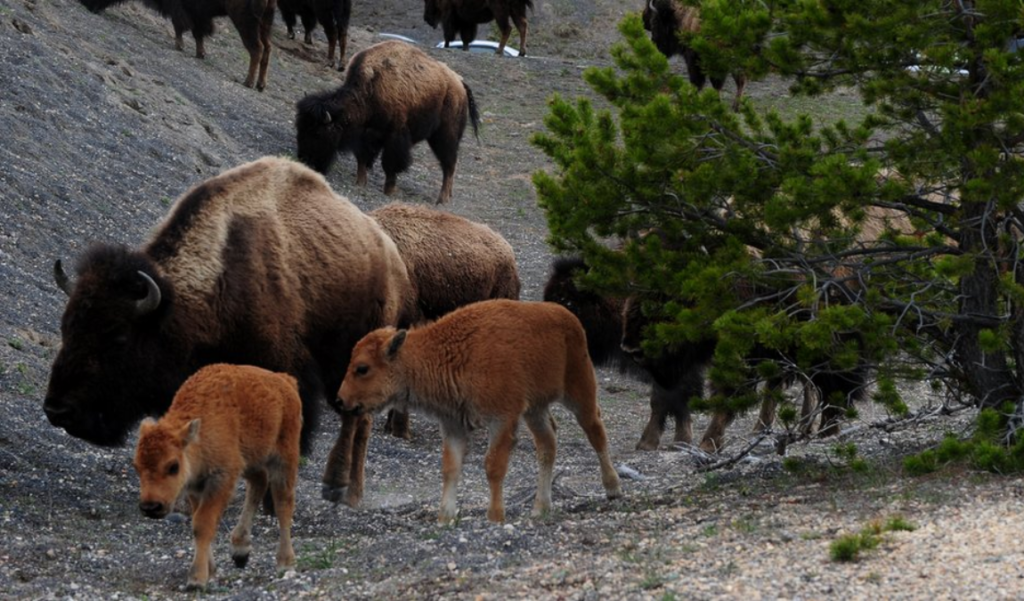
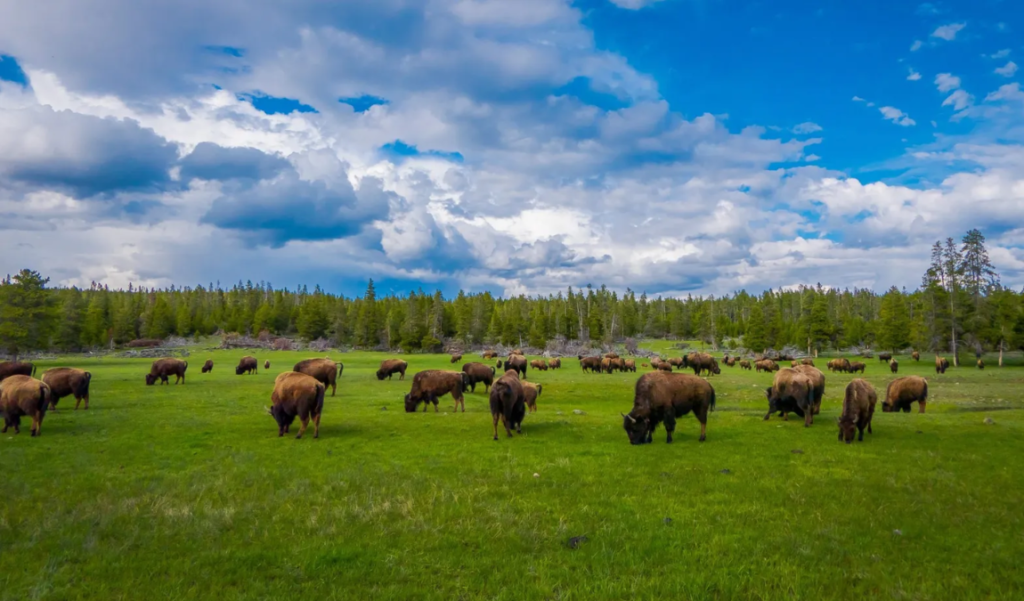
Yellowstone National Park is home to the largest free-roaming bison population in the United States. These animals are not only iconic but also essential to the park’s ecological balance.
Why Bison Are Central to Yellowstone
- Bison are a keystone species
- They shape grasslands through grazing
- Their movement influences soil health and plant diversity
Because of their size and numbers, bison behavior—including a bison cliffside fall Yellowstone National Park—has visible and sometimes dramatic consequences.
What Is a Bison Cliffside Fall in Yellowstone National Park?
A bison cliffside fall Yellowstone National Park refers to incidents where bison slip, lose footing, or are forced off steep slopes, riverbanks, or cliffs, resulting in injury or death. These events often occur suddenly and appear chaotic to human observers.
However, these falls are not acts of stupidity or panic—they are unintended consequences of ancient herd behavior meeting extreme terrain.
Why Do Bison Experience Cliffside Falls in Yellowstone National Park?
Herd Mentality and Survival Instinct
Bison evolved to survive predators like wolves and bears. Their strongest defense is moving together as a herd. When one bison moves, others follow—sometimes blindly.
In narrow or icy terrain, this instinct can trigger a bison cliffside fall Yellowstone National Park when:
- One animal slips
- Others follow without assessing danger
- Momentum builds in large groups
Yellowstone’s Extreme Terrain
Yellowstone is filled with:
- Steep riverbanks
- Rocky escarpments
- Snow-covered cliffs
- Volcanic plateaus
A bison cliffside fall Yellowstone National Park often happens in areas where the landscape suddenly drops away, hidden under snow or grass.
Seasonal Factors Behind Bison Cliffside Falls
Winter: Ice, Snow, and Fatal Slips
Winter is the most dangerous season for bison.
- Frozen ground reduces traction
- Snow hides drop-offs
- Hunger pushes bison into risky areas
Many recorded bison cliffside fall Yellowstone National Park incidents occur during winter months.
Spring Thaw and Riverbank Collapse
As snow melts:
- Riverbanks weaken
- Soil becomes unstable
- Heavy bison weight causes collapses
This leads to bison falling into rivers or off cliffs—another form of bison cliffside fall Yellowstone National Park.
Famous Locations of Bison Cliffside Falls in Yellowstone National Park
Lamar Valley
Known as the “Serengeti of North America,” Lamar Valley has:
- High bison density
- Steep surrounding terrain
Several well-documented bison cliffside fall Yellowstone National Park cases have occurred here.
Yellowstone River Canyons
The Yellowstone River cuts deep canyons through the park. Bison crossing near river edges sometimes misjudge footing, resulting in fatal falls.
Thermal Areas and Steep Basins
Hot springs and geyser basins create unstable ground. Thin crusts can collapse under bison weight, indirectly leading to cliffside accidents.
Do Wolves Cause Bison Cliffside Falls in Yellowstone National Park?
Wolves are often blamed, but the truth is complex.
- Wolves rarely chase healthy adult bison off cliffs
- Most falls occur without predators nearby
- Panic from environmental factors is more common
While predators influence movement, bison cliffside fall Yellowstone National Park events are usually accidental, not predator-driven.
Human Influence on Bison Cliffside Falls
Tourism Pressure
Crowds, vehicles, and noise can alter bison movement patterns.
- Bison avoid congested areas
- Sudden direction changes increase risk
Human presence can indirectly contribute to bison cliffside fall Yellowstone National Park incidents.
Roads and Artificial Barriers
Modern infrastructure intersects natural migration routes. When bison detour to avoid roads, they may encounter unsafe terrain.
Are Bison Cliffside Falls Natural or Preventable?
This is a difficult but important question.
Natural Process
- Bison lived here long before humans
- Cliffside deaths occurred historically
- Nature accepts loss as balance
From an ecological perspective, a bison cliffside fall Yellowstone National Park is a tragic but natural event.
Why Yellowstone Does Not Intervene
Yellowstone follows a hands-off wildlife management policy.
- No fencing wild animals
- No altering natural behavior
- No rescuing animals from natural dangers
Intervening would disrupt the ecosystem and set a dangerous precedent.
What Happens After a Bison Cliffside Fall in Yellowstone National Park?
The Role of Scavengers
A fallen bison feeds:
- Wolves
- Bears
- Eagles
- Coyotes
Nothing is wasted in Yellowstone. Even a bison cliffside fall Yellowstone National Park supports life.
Nutrient Recycling
Decomposing remains enrich soil and waterways, promoting plant growth and biodiversity.
Emotional Impact of Bison Cliffside Falls on Visitors
Visitors often feel shock, sadness, or anger when witnessing these events.
However, understanding the context changes perception:
- Nature is not cruel—it is indifferent
- Survival does not guarantee safety
- Yellowstone remains wild by design
Seeing a bison cliffside fall Yellowstone National Park is witnessing nature without filters.
How Often Do Bison Cliffside Falls Occur in Yellowstone National Park?
Exact numbers are difficult to track, but:
- Incidents happen every year
- Most go unrecorded
- Only dramatic cases gain attention
Despite visibility, bison cliffside fall Yellowstone National Park events represent a small percentage of total bison mortality.
What Scientists Say About Bison Cliffside Falls
Wildlife biologists emphasize:
These incidents indicate natural behavior in an untouched ecosystem.
They argue that preventing such events would undermine Yellowstone’s role as a true wilderness.
Why Bison Cliffside Falls Matter Ecologically
These events:
- Control population density
- Support predator species
- Maintain ecosystem balance
A bison cliffside fall Yellowstone National Park is not meaningless—it is part of a larger ecological cycle.
The Harsh Reality of Wild Freedom
Freedom in the wild includes risk.
Bison are not protected from:
- Gravity
- Ice
- Terrain
- Instinctual mistakes
This reality defines Yellowstone and explains why bison cliffside fall Yellowstone National Park incidents continue.
Lessons Humans Can Learn from Bison Cliffside Falls
- Nature does not prioritize safety
- Intervention has consequences
- Wild places must remain wild
The discomfort we feel reflects our distance from natural reality.
The Future of Bison in Yellowstone National Park
Despite occasional tragedies:
- Yellowstone’s bison population is strong
- Genetic diversity is increasing
- Migration patterns are expanding
The occasional bison cliffside fall Yellowstone National Park does not threaten the species—it confirms their resilience.
Frequently Asked Questions (FAQs)
1. What is a bison cliffside fall in Yellowstone National Park?
A bison cliffside fall Yellowstone National Park refers to incidents where bison slip or fall from steep cliffs, riverbanks, or slopes due to natural terrain, ice, herd movement, or environmental conditions.
2. Why do bison fall from cliffs in Yellowstone National Park?
Bison fall mainly due to herd instinct, slippery surfaces, hidden drop-offs, and difficult terrain. Bison cliffside fall Yellowstone National Park events are usually accidental and natural.
3. Are bison cliffside falls common in Yellowstone National Park?
Yes, bison cliffside fall Yellowstone National Park incidents occur every year, but most go unnoticed unless they happen near roads or tourist areas.
4. Do wolves cause bison cliffside falls in Yellowstone National Park?
In most cases, no. Wolves rarely chase adult bison off cliffs. Bison cliffside fall Yellowstone National Park events usually happen without predator involvement.
5. During which season do most bison cliffside falls occur?
Most bison cliffside fall Yellowstone National Park occur during winter and early spring due to ice, snow, and unstable riverbanks.
6. Why doesn’t Yellowstone rescue bison after cliffside falls?
Yellowstone follows a strict hands-off wildlife policy. Intervening in bison cliffside fall Yellowstone National Park would disrupt natural ecological processes.
7. Are bison cliffside falls caused by tourists?
Tourists do not directly cause falls, but human presence can alter bison movement. This can indirectly increase the risk of a bison cliffside fall Yellowstone National Park.
8. What happens to a bison after a cliffside fall in Yellowstone National Park?
After a bison cliffside fall Yellowstone National Park, the carcass supports scavengers like wolves, bears, eagles, and coyotes, contributing to ecosystem balance.
9. Are bison cliffside falls a sign of poor wildlife management?
No. Experts agree that bison cliffside fall Yellowstone National Park events are signs of a functioning wild ecosystem, not management failure.
10. Do bison intentionally jump off cliffs in Yellowstone National Park?
No. A bison cliffside fall Yellowstone National Park is never intentional. It happens due to misjudgment, slipping, or following herd movement.
11. Where do most bison cliffside falls occur in Yellowstone National Park?
Common locations include Lamar Valley, Yellowstone River canyons, and steep thermal basin areas where terrain is unpredictable.
12. How do bison cliffside falls affect Yellowstone’s ecosystem?
A bison cliffside fall Yellowstone National Park helps regulate population, feeds predators, and recycles nutrients into soil and waterways.
13. Are bison populations declining because of cliffside falls?
No. Despite occasional bison cliffside fall Yellowstone National Park incidents, the bison population remains strong and stable.
14. Can climate change increase bison cliffside falls in Yellowstone National Park?
Yes. Climate change alters snow patterns, freeze-thaw cycles, and terrain stability, potentially increasing bison cliffside fall Yellowstone National Park events.
15. What should visitors do if they witness a bison cliffside fall in Yellowstone National Park?
Visitors should keep a distance, avoid interfering, and report the incident to park authorities. Witnessing a bison cliffside fall Yellowstone National Park is observing nature in its raw form.
Conclusion: Understanding the Truth Behind Bison Cliffside Falls in Yellowstone National Park
The phenomenon of a bison cliffside fall Yellowstone National Park is not a failure of management, intelligence, or conservation. It is a reminder that Yellowstone remains one of the last truly wild landscapes on Earth.
These moments, though painful to witness, represent authentic wilderness—where life and death follow ancient rhythms untouched by human comfort.
To preserve Yellowstone is to accept its harsh truths. And to understand a bison cliffside fall Yellowstone National Park is to understand what it truly means to let nature remain wild.


Pingback: Best National Parks in the USA for First-Time Visitors